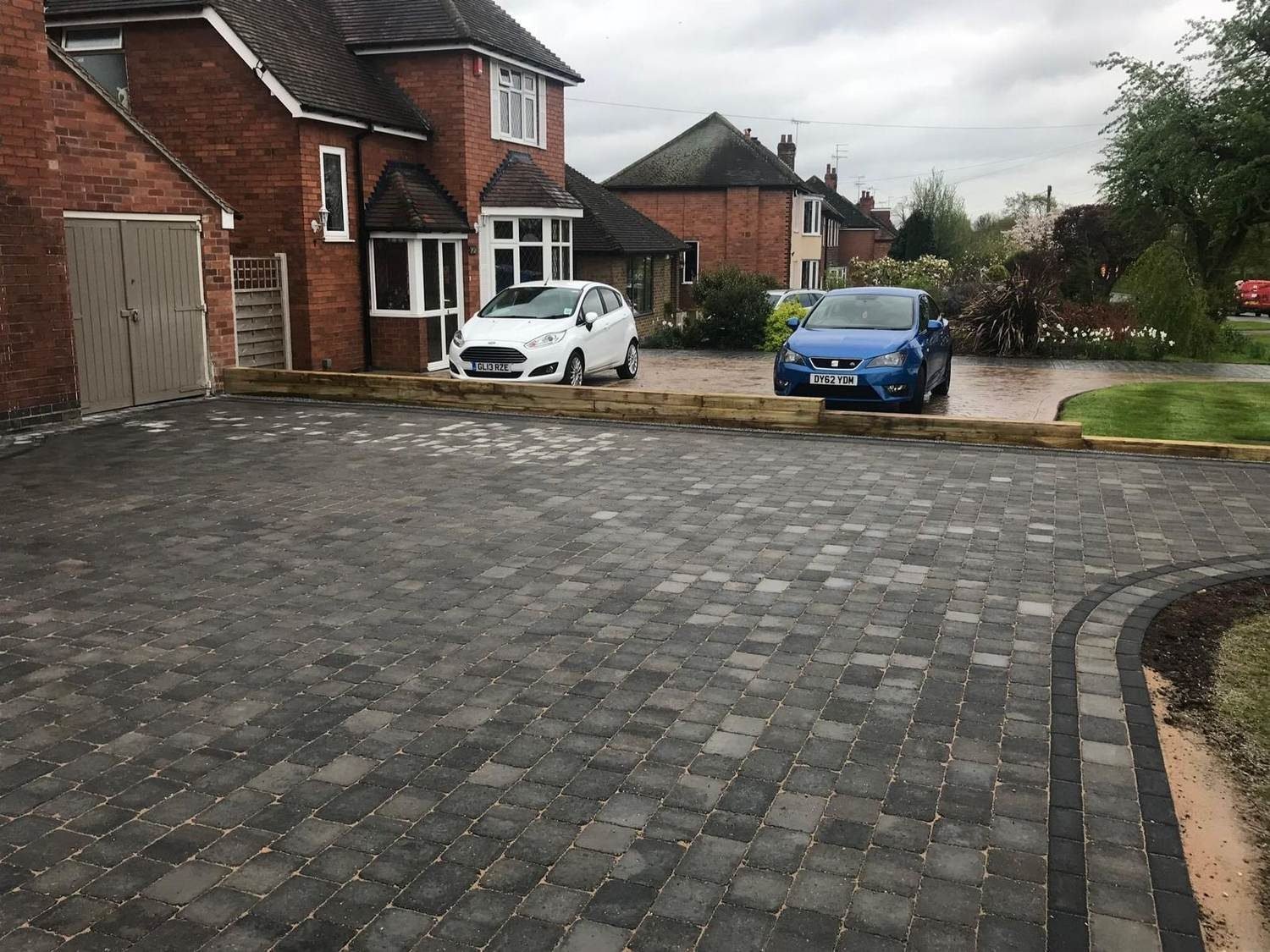
The surface of a driveway gets all the attention, but nearly every failed driveway we’re asked to fix failed underneath. Sinking, ruts, puddles, spreading edges and weeds pushing through are almost always caused by poor groundwork. Here’s what a properly built driveway involves, so you know what to look for in any quote.
1. Excavation to firm ground
The old surface and soft topsoil are dug out and taken away. For a driveway that takes cars, that typically means excavating around 150–250mm, depending on the surface and the ground. On soft clay, which is common across the Weald, we may dig deeper until we reach firm ground. Removing and disposing of the spoil should be included in your price.
2. A geotextile membrane
On many sites, a geotextile membrane goes down first. It stops the sub-base stone being pushed into soft ground over time and helps keep weeds from coming up from below.
3. A compacted Type 1 sub-base
This is the foundation of the driveway. MOT Type 1 is a graded crushed stone laid in layers and compacted with a heavy plate or roller. For vehicle driveways, a compacted depth of around 100–150mm is common, and more on poor ground. Skimping here is the most common shortcut, and it’s what causes driveways to sink.
4. Edges set in concrete
Block paving and resin need a firm edge to stop them spreading. Kerbs or edging blocks should be bedded on, and backed with, concrete. This is called haunching. Loose edges are one of the first things to fail on a cheap job.
5. Levels, falls and drainage
Water has to go somewhere. A driveway needs a gentle fall so water runs off it, and away from the house, garage and neighbours. Where it can’t drain onto a lawn or border, channel drains and soakaways are added. On a front garden, this is also what keeps you within the planning rules. See our planning permission guide.
6. The surface
Only now does the surface go down. Block paving goes on a screeded bed of sharp sand, is compacted, then has its joints filled with kiln-dried sand. Tarmac is laid hot in one or two layers and rolled. Resin bound goes onto a prepared asphalt or concrete base. We explain the options in driveway surfaces compared.
Questions to ask any driveway contractor
- How deep will you excavate, and is removing the waste included?
- What sub-base will you use, how deep, and how will it be compacted?
- Will the edges be set in concrete?
- Where will the water go? Will the driveway meet the planning rules?
- Is the price fixed and in writing, and what guarantee do you give?
- Are you insured, and can I see reviews from real customers?
A good contractor will answer all of these clearly. We put our answers in every written quote: full excavation, a compacted sub-base, haunched edges, drainage designed in, public liability insurance and a five-year guarantee on workmanship.
Want advice on your own project?
Send a few photos and rough measurements for a free guide price, or book a free site visit. We cover West Sussex, Surrey and Hampshire.